
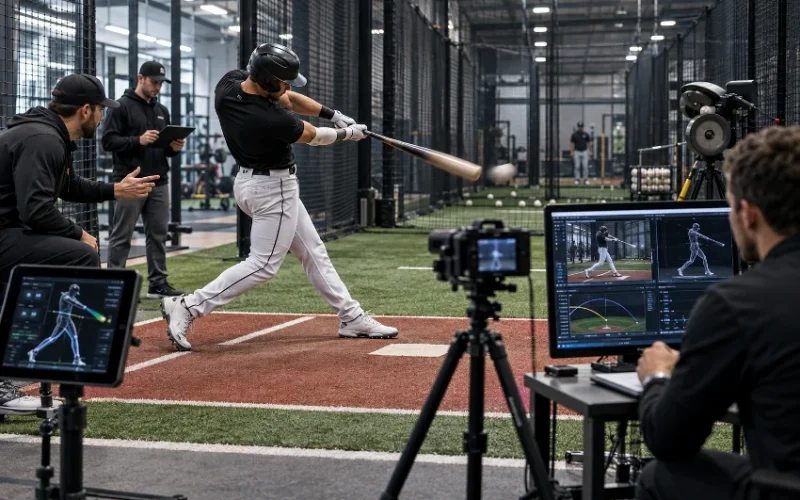
Modern Baseball Player Development combines traditional coaching with biomechanics, sports science, advanced analytics, and intelligent scouting systems. Teams no longer rely entirely on batting averages, pitching velocity, or what scouts observe during individual games.
Instead, they examine how athletes move, think, recover, and adapt under pressure. Understanding these interconnected elements helps coaches, organisations, and players build sustainable competitive advantages.
1. Understanding Elite Baseball Player Development Frameworks
Professional baseball development has evolved from traditional skills coaching into a sophisticated process involving athletic performance, technology, psychology, and strategic planning.
Successful organisations recognise that improving isolated abilities isn’t enough. Players must develop complete skill sets that translate into consistent performance against increasingly difficult competition.
Building Individual Player Development Plans
Every athlete enters a development program with different physical characteristics, technical abilities, and competitive experiences.
A powerful hitter might struggle with breaking-ball recognition, while a technically sound pitcher could lack sufficient strength to maintain velocity throughout a season.
Individual development plans identify these limitations and establish measurable improvement objectives.
A comprehensive assessment usually evaluates hitting mechanics, pitching performance, defensive skills, physical conditioning, movement efficiency, and decision-making.
Coaches then prioritise weaknesses that offer the greatest potential performance improvement.
For example, a minor league outfielder might already demonstrate excellent sprint speed and defensive range but struggle against high-velocity fastballs.
Rather than spending additional practice time developing speed, the coaching staff could concentrate on swing timing, visual recognition, and bat-to-ball efficiency.
This targeted approach makes training more purposeful.
Establishing Long-Term Development Milestones
Elite performance rarely develops through a single successful training cycle.
Organisations need structured progression models that connect short-term improvements with long-term competitive objectives.
A development roadmap might include a foundational assessment, technical adjustments, controlled practice environments, competitive testing, and performance reassessment.
Progress should be measured through both training indicators and actual game results.
An athlete who increases batting exit velocity during practice, for instance, must eventually demonstrate improved contact quality against live pitching.
The important question isn’t simply whether a player can perform a skill in training. It’s whether that ability transfers into meaningful competitive situations.
2. Advanced Baseball Training and Athletic Performance Optimisation
Baseball requires an unusual combination of rotational power, explosive acceleration, coordination, mobility, and technical precision.
Unlike sports that emphasise continuous endurance, baseball frequently demands short bursts of highly specialised movement separated by recovery periods.
Effective training programs must reflect these unique physical demands.
Strength, Power, and Rotational Mechanics
Rotational power plays a central role in hitting and pitching performance.
Both movements depend on coordinated energy transfer through the lower body, torso, shoulders, and upper extremities.
Strength training can improve an athlete’s capacity to produce and control force, while power exercises help develop rapid movement capabilities.
Common training methods include appropriately supervised resistance exercises, medicine-ball rotational throws, jumping variations, and sprint acceleration drills.
However, selecting heavier weights or performing more repetitions doesn’t automatically produce better baseball performance.
Coaches must consider movement quality, exercise progression, individual readiness, and the relationship between strength improvements and technical skills.
For example, a hitter might become substantially stronger during the offseason without experiencing meaningful gains in bat speed.
This suggests that the athlete may need more specific rotational power training, improved coordination, or adjustments to swing mechanics.
Speed, Agility, and Defensive Movement
Baseball speed involves more than running quickly between bases.
Players need efficient acceleration, rapid directional changes, precise footwork, and the ability to react to unpredictable situations.
An outfielder’s first movement after contact can influence whether a difficult fly ball becomes an out or an extra-base hit.
Similarly, middle infielders must combine lateral movement with balance, throwing accuracy, and fast decision-making.
Training should therefore include game-relevant movement patterns rather than relying exclusively on generic agility ladders.
Reaction-based fielding drills, short-distance acceleration, and position-specific footwork exercises provide more realistic challenges.
Coaches should also distinguish between pure running speed and anticipation. A player with slightly slower sprint times may compensate through exceptional positioning and early ball recognition.
Periodisation and Seasonal Training Design
Elite training programs adjust physical demands throughout the competitive calendar.
Offseason periods generally provide greater opportunities to develop strength, power, and technical qualities.
Preseason training progressively introduces baseball-specific intensity and competitive preparation.
During the season, the priority often shifts toward maintaining physical capacity, managing fatigue, and preserving performance.
For example, a high-volume strength program that works during the offseason may become counterproductive when combined with frequent games and travel.
Training loads should be adjusted according to playing time, recovery status, position, and individual response.
This process, commonly called periodisation, helps coaches organise development without treating every week as an opportunity for maximum training intensity.
3. Advanced Hitting Development and Swing Biomechanics
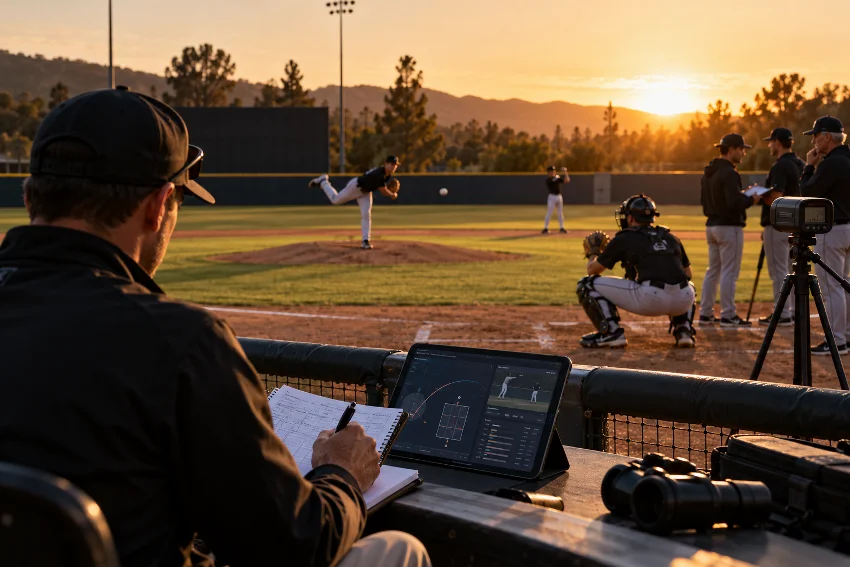
Modern hitting instruction combines traditional mechanical coaching with measurable movement and ball-flight data.
While batting average remains familiar to most fans, advanced training focuses on understanding the underlying skills that influence offensive production.
These include bat speed, swing decisions, contact efficiency, and the ability to handle different pitch types.
Optimising Bat Speed and Contact Quality
Bat speed influences the potential energy transferred to the baseball during contact.
However, a fast swing becomes less valuable when the hitter consistently misses the optimal contact point.
Driveline Baseball’s training resources emphasise the relationship between bat speed, bat path, and effective contact.
Coaches can use bat sensors, high-speed video, and ball-tracking systems to identify opportunities for improvement.
For example, consider two hypothetical hitters:
| Performance Metric | Hitter A | Hitter B |
|---|---|---|
| Average Bat Speed | 72 mph | 75 mph |
| Average Exit Velocity | 86 mph | 89 mph |
| Contact Rate | 84% | 76% |
| Chase Rate | 24% | 34% |
These illustrative figures show why raw power doesn’t explain everything.
Hitter B generates greater swing speed and harder contact, but Hitter A demonstrates stronger contact consistency and strike-zone discipline.
A personalised training program would approach these athletes differently.
Hitter A might benefit from carefully programmed power development, while Hitter B could prioritise pitch recognition and improved swing selection.
Using Launch Angle and Ball-Flight Analytics
Launch angle measures the vertical direction of a baseball immediately after contact.
Combined with exit velocity, it helps describe the quality and potential outcome of a batted ball.
MLB’s Statcast system identifies hard-hit contact at an exit velocity of at least 95 mph and defines its launch-angle sweet-spot range as 8–32 degrees.
However, these definitions should not be interpreted as universal swing targets.
Different hitters possess different physical characteristics, offensive roles, and swing tendencies.
A player who consistently drives hard line drives may not benefit from aggressively changing mechanics to pursue fly balls.
The objective is to improve productive contact rather than chase a single statistical benchmark.
Training Pitch Recognition and Swing Decisions
Advanced hitters must identify pitch type, trajectory, velocity, and likely location within extremely limited time.
This makes visual processing and decision-making essential parts of offensive development.
Training methods can include controlled pitching-machine variations, live batting practice, video-based recognition exercises, and simulated game counts.
For example, a hitter struggling against sliders might practise recognising the pitch earlier before progressing into full-speed competition.
Coaches should track improvements in chase rate, swing decisions, contact quality, and performance against particular pitch categories.
The goal is to make better decisions under genuine competitive pressure.
4. Pitching Development, Biomechanics, and Arm Performance
Pitching development presents one of baseball’s most technically demanding challenges.
Elite pitchers must combine velocity, command, movement characteristics, deception, physical preparation, and tactical awareness.
Importantly, performance improvement must be balanced with appropriate workload management and athlete health.
Advanced Pitch Design and Movement Analysis
Pitch design involves analysing how a baseball moves through the air and how specific delivery characteristics influence its trajectory.
Modern tracking systems provide information about velocity, spin, release position, movement, and other measurable pitch properties.
These measurements allow coaches to examine how different pitches work together.
For instance, a pitcher with a strong four-seam fastball might benefit from developing a secondary pitch that creates a contrasting movement pattern.
However, spin rate alone does not determine pitch quality.
Release consistency, spin direction, movement, location, and the hitter’s perception all influence effectiveness.
A well-designed pitch should complement the athlete’s natural capabilities rather than force every pitcher into the same mechanical model.
Improving Velocity Without Sacrificing Control
Velocity development often involves strength training, movement analysis, throwing progression, and improved force transfer.
High-speed cameras and motion-capture systems can help identify mechanical inefficiencies.
For example, a pitcher may struggle to coordinate lower-body movement with trunk rotation and arm action.
A qualified pitching coach can use biomechanical feedback to evaluate whether technical adjustments improve performance.
Nevertheless, increasing throwing intensity without suitable preparation can create unnecessary injury risk.
Throwing programs should reflect the athlete’s age, training history, current health, and competitive schedule.
For younger athletes, the MLB and USA Baseball Pitch Smart initiative provides age-specific workload and rest guidance.
Pitching Workload and Recovery Management
Pitch counts remain an important component of monitoring workload, particularly in youth baseball.
However, professional and collegiate programs may also evaluate throwing intensity, recent workloads, bullpen activity, fatigue, and individual recovery patterns.
Recent Driveline Baseball analysis has highlighted the importance of evaluating pitching workload in relation to individual capacity and usage patterns.
A pitcher who appears fresh after several innings may still require careful monitoring when workload increases beyond familiar levels.
Similarly, two athletes with identical pitch counts may experience different physical demands.
Coaches should evaluate performance changes, discomfort, recovery responses, and medical guidance rather than relying on a single metric.
5. Elite Baseball Scouting and Talent Identification Strategy
Scouting combines observation, projection, statistical analysis, and professional judgement.
Historically, scouts relied heavily on physical tools, playing performance, and personal evaluations.
Modern departments can now combine these observations with increasingly detailed performance databases.
Traditional Scouting Meets Advanced Analytics
Scouts commonly evaluate players using the five traditional tools: hitting ability, power, running speed, throwing strength, and fielding.
Pitchers are assessed through qualities such as pitch repertoire, velocity, command, movement, mechanics, and projected durability.
These observations remain valuable because statistics cannot fully describe every aspect of athletic development.
However, data helps distinguish between impressive short-term results and repeatable underlying skills.
A hitter with an excellent batting average might benefit from unusually favourable batted-ball outcomes.
Another player with more modest results may demonstrate stronger exit velocity, disciplined swing decisions, and sustainable contact characteristics.
Combining scouting reports with analytical evidence creates a more complete evaluation.
Future Value and Prospect Projection
Prospect evaluation requires predicting what an athlete might become rather than simply measuring current production.
FanGraphs uses Future Value grades to organise prospect projections, while its 2026 valuation methodology considers historical outcomes and different player categories.
A physically mature teenage player may dominate younger opponents but possess limited remaining developmental upside.
Meanwhile, a less polished prospect may demonstrate unusual athleticism, coordination, and adaptability.
Scouts must assess both current skill and the potential for future improvement.
This requires understanding age-relative performance, competition quality, physical projection, and developmental history.
Reducing Bias in Scouting Decisions
Traditional scouting can be affected by subjective preferences, limited observation periods, and assumptions about physical appearance.
Data-driven scouting can introduce different problems, including poor sample sizes and misleading statistical comparisons.
An effective evaluation process uses multiple sources of evidence.
For example, teams can compare live scouting reports, video assessments, performance metrics, and medical information before reaching major recruitment decisions.
Structured evaluation criteria help decision-makers explain why a player receives a particular grade.
The objective isn’t to replace scouts with algorithms. It’s to create a more consistant and transparent talent identification process.
6. Baseball Performance Analytics and Development Technology
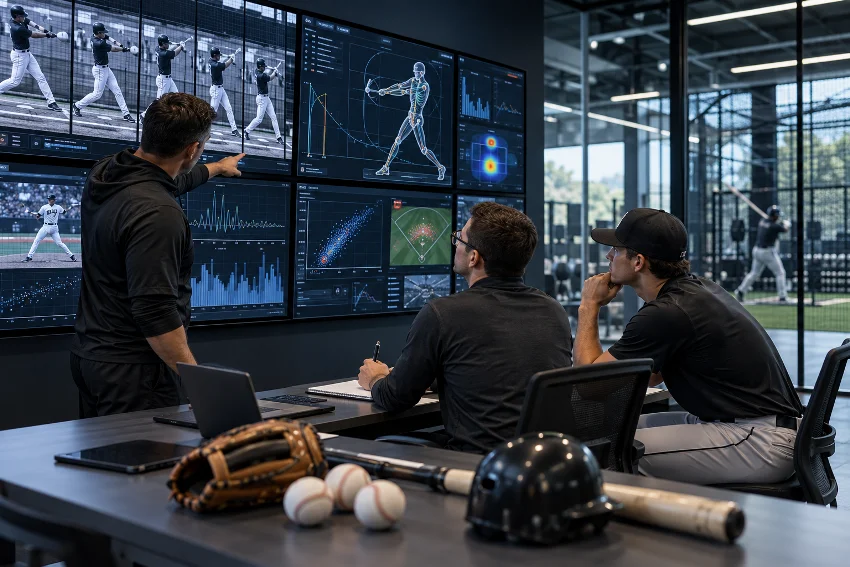
Technology has transformed how organisations measure and understand athletic performance.
Radar tracking, optical systems, bat sensors, video analysis, and biomechanics laboratories provide information that was previously difficult to obtain.
The challenge is turning this growing volume of data into practical coaching decisions.
Using Statcast and Performance Tracking
MLB’s Statcast system measures a wide range of on-field actions, including batted-ball speed, pitch characteristics, sprint speed, and defensive movement.
These metrics can reveal differences between traditional results and underlying performance quality.
For example, a hitter experiencing a temporary slump may continue producing strong contact despite recording fewer hits.
Coaches can use this distinction to avoid unnecessary mechanical adjustments.
Similarly, pitching data can highlight changes in movement, release consistency, or velocity that deserve further investigation.
However, professional-level benchmarks must be interpreted carefully when evaluating younger athletes.
Developmental stage, competition level, equipment, and measurement conditions can significantly influence comparisons.
Building Player Performance Dashboards
A practical performance dashboard should present relevant metrics without overwhelming coaches or athletes.
For hitters, the dashboard might track exit velocity, contact rate, chase rate, bat speed, and performance against different pitch types.
For pitchers, it could display velocity trends, strike percentage, pitch movement, workload, and recovery indicators.
Defensive players may require information related to throwing accuracy, reaction times, sprint acceleration, and positional movement.
Dashboards become most useful when they connect measurements with specific development objectives.
If a player improves bat speed but shows declining contact consistency, the coaching staff should examine whether training changes are producing unwanted trade-offs.
Translating Analytics Into Coaching Decisions
Collecting accurate data doesn’t guarantee performance improvement.
Coaches need to identify which measurements matter for a particular athlete and communicate their implications clearly.
An effective feedback system might focus on one major technical adjustment over several weeks.
Progress can then be assessed through controlled drills before being evaluated in competitive situations.
Constantly changing training objectives based on small performance fluctuations can create confusion.
The most succesful analytical programs combine reliable measurement with clear communication and patient skill development.
7. Injury Prevention, Recovery, and Mental Performance
Long-term athletic development depends on keeping players physically prepared and mentally resilient.
Even highly talented athletes struggle to progress when recurring injuries, excessive fatigue, or psychological pressure disrupt training.
Performance management must therefore extend beyond technical instruction.
Recovery and Injury Risk Management
Baseball involves repeated throwing, rotational movements, sprinting, and demanding competitive schedules.
Recovery planning should consider sleep, nutrition, hydration, overall workload, and individual injury history.
Coaches can monitor changes in throwing performance, reported soreness, fatigue, and movement quality.
However, no single monitoring method can reliably predict every injury.
Players experiencing persistent pain or concerning symptoms should be evaluated by qualified healthcare professionals.
Workload guidelines and appropriate rest remain particularly important for developing pitchers.
Recovery isn’t lost training time. It’s an essential part of allowing athletes to adapt to demanding physical preparation.
Mental Skills and Competitive Confidence
Baseball creates frequent opportunities for failure.
Even elite hitters experience unsuccessful plate appearances, and talented pitchers occasionally lose command.
Athletes need psychological skills that help them respond constructively to difficult performances.
Useful methods include performance routines, attentional control, goal setting, and reflective practice.
A hitter struggling after several strikeouts might benefit from focusing on pitch selection and decision quality rather than obsessing over recent outcomes.
Coaches should encourage realistic expectations and provide feedback that separates individual mistakes from personal identity.
Building Sustainable Athlete Habits
Long-term progress depends on consistent routines rather than occasional bursts of extreme effort.
Players benefit from understanding their own training objectives, tracking improvement, and communicating openly with coaches.
Individual accountability can include preparation, recovery habits, practice quality, and willingness to review performance.
At the same time, development programs must recognise differences in age, academic commitments, family circumstances, and competitive demands.
A sustainable system gives athletes enough structure to improve while preserving flexibility for changing circumstances.
8. Creating a Long-Term Baseball Performance Strategy
The most effective development systems connect scouting, coaching, sports science, and performance analysis into a unified process.
Rather than operating as independent departments, specialists should share relevant information and contribute to individual player plans.
Designing a Measurable Development Roadmap
Consider a hypothetical 18-year-old shortstop with excellent defensive instincts but inconsistent offensive performance.
An initial assessment identifies three priorities: improving contact against elevated fastballs, increasing functional strength, and maintaining defensive mobility.
The coaching staff develops a 12-week review cycle with clearly defined objectives.
| Development Area | Initial Assessment | Illustrative Target |
|---|---|---|
| Bat Speed | 68 mph | 71 mph |
| Contact Rate | 73% | 79% |
| Chase Rate | 33% | 28% |
| Sprint Speed | 27 ft/sec | Maintain |
| Training Availability | 90% | Improve consistency |
These are hypothetical measurements and planning targets, not guaranteed improvements or universal standards.
The program would combine technical hitting sessions, appropriate resistance training, competitive batting practice, and regular recovery reviews.
Progress would be assessed using comparable testing conditions and sufficient observations.
If offensive improvements appear alongside declining movement quality, the training plan should be reconsidered.
Connecting Organisational Goals With Individual Growth
Baseball organisations must balance short-term competitive success with long-term talent development.
A highly promising prospect may not benefit from immediate promotion if important technical weaknesses remain unresolved.
Conversely, holding a player at an easier competitive level for too long may restrict further progress.
Promotion decisions should consider performance, skill readiness, psychological adjustment, and the quality of competition.
Clear communication between coaches, analysts, scouts, and front-office personnel helps maintain alignment.
This integrated approach supports more reliable development decisions and creates a stronger organisational talent pipeline.
Elite Baseball Player Development requires more than physical talent or repetitive practice. Advanced training, biomechanical analysis, intelligent scouting, recovery management, and individualised coaching all contribute to sustainable performance.
The strongest programs turn reliable data into practical improvements while protecting long-term athlete health. Start evaluating your current development strategy today, identify measurable priorities, and build a more effective pathway toward competitive excellence.
Knowledge grows through continuous exploration and exposure to different ideas. Visit the suggested resource to investigate related topics, review useful information, and discover additional learning opportunities. These supplementary materials can provide valuable context and encourage a more comprehensive understanding of the subject.